How robotics is opening global opportunities for young people across Africa
Imagine being nine years old and never having left home — then boarding your first airplane to represent your country on the other side of the world. Or going from a school with no computer room to presenting your robot to judges from ten different countries. Moments like these are unfolding across Africa right now, as robotics begins to transform how young people learn, build, and imagine their futures.
Across 14 African countries, young people are discovering robotics — often in schools without computer rooms, in shared community spaces, or through after-school clubs run by committed teachers and volunteers. For some, travelling to a national competition is a first. For others, boarding a plane to represent their country internationally marks a life-changing moment.
In 2025, more than 42,000 young people across Africa took part in World Robot Olympiad (WRO), supported by over 2,000 trained educators and a growing network of partners working to expand access to robotics and STEM education.
Innovation with Purpose
African teams often approach robotics with a strong focus on real-world impact — designing solutions rooted in local needs.
In Uganda, a country where one doctor serves 25,000 patients, three twelve-year-olds with only months of coding experience designed a solar-powered medical assistant that reads vital signs and identifies illnesses even in off-grid settings.
Further south, three girls imagined a way to grow food where climate change has left the land dry. Their Green Thumb Project is a solar-powered autonomous greenhouse that produces nutrient-dense food affordably for schools, small farmers, and families in need — a blueprint for climate-smart agriculture ready to scale.
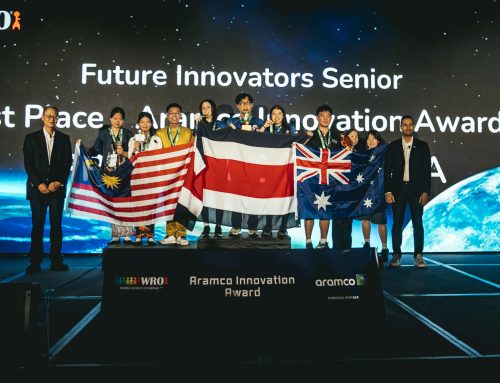
Stories like these were repeated across the continent as teams travelled to Singapore, many experiencing their first passport, first international trip, and first encounter with a truly global community of young innovators.
WRO Africa – Meet the Winners Series
It Takes a Village: Scaling Through Partnership
The rapid growth of WRO in Africa is driven by collaboration — between educators, ministries, nonprofits, and private-sector partners working together to build sustainable learning ecosystems.
In Nigeria, nonprofit organizations partnered with government to scale robotics and STEM education by training teachers so teachers can train students. In Lagos State alone, more than 300 junior and senior secondary schools took part in regional and state-level WRO qualification challenges. Nationwide, this approach enabled 20,000 young people to participate in WRO in 2025.
Watch the WRO Nigeria journey on YouTube
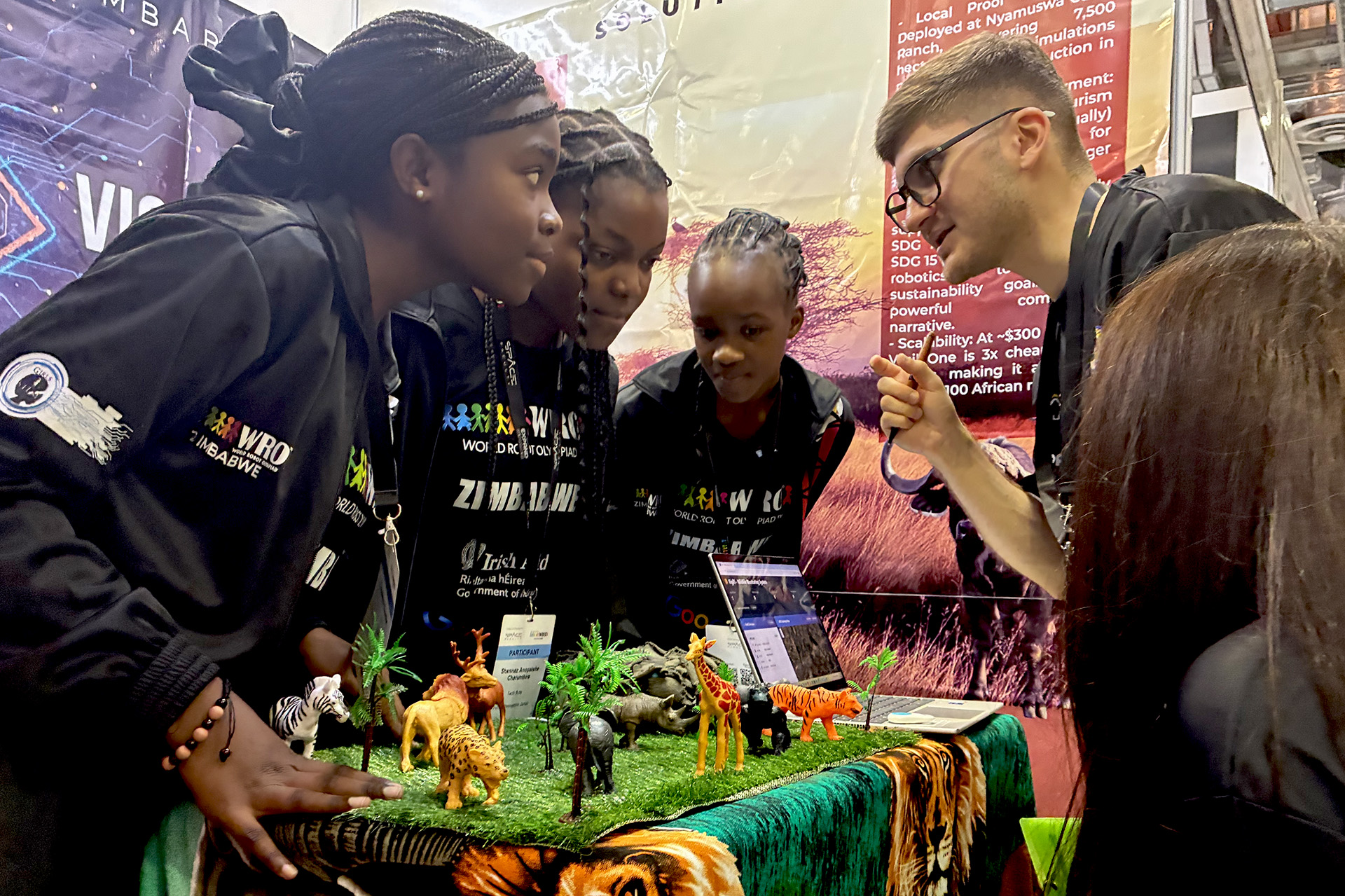
Across the continent, women play a leading role in this growth, with the majority of WRO country coordinators in Africa being women — a powerful signal for girls considering futures in STEM. In Zimbabwe, WRO Country Coordinator Victoria Nxumalo, backed by partnerships with Google and ECA, has accelerated national efforts to equip young people with digital, AI, and robotics skills. Her team has upskilled 150 teachers and reached 5,000 learners, laying the groundwork for introducing AI education from the earliest grades.
Beyond the Competition
For African students, WRO does not end when the competition does. They return home with new skills, confidence, and a global perspective — ready to mentor others, start clubs, and keep building. The impact extends far beyond robotics, strengthening creativity, collaboration, problem-solving, and resilience.
WRO’s growth across Africa is powered by partners who believe access to robotics education should not depend on geography or circumstance. By partnering with WRO, you help scale teacher training, learning spaces, and opportunities for young people — enabling them to build the skills and confidence to lead change in their own communities and beyond.
👉 Do you want to create impact with WRO?
Join WRO as a partner and help scale robotics education where it matters most.
This piece is a shortened adaptation of a longer article shared by the Camden Education Trust.
WRO in Africa | 2025
- 42,000+ young people engaged in educational robotics
- 14 countries participating
- 2,000+ teachers trained
- 50 teams competing on the global competition stage